

Tie-Dye vs. Regular Dyeing: Which is Right for You?
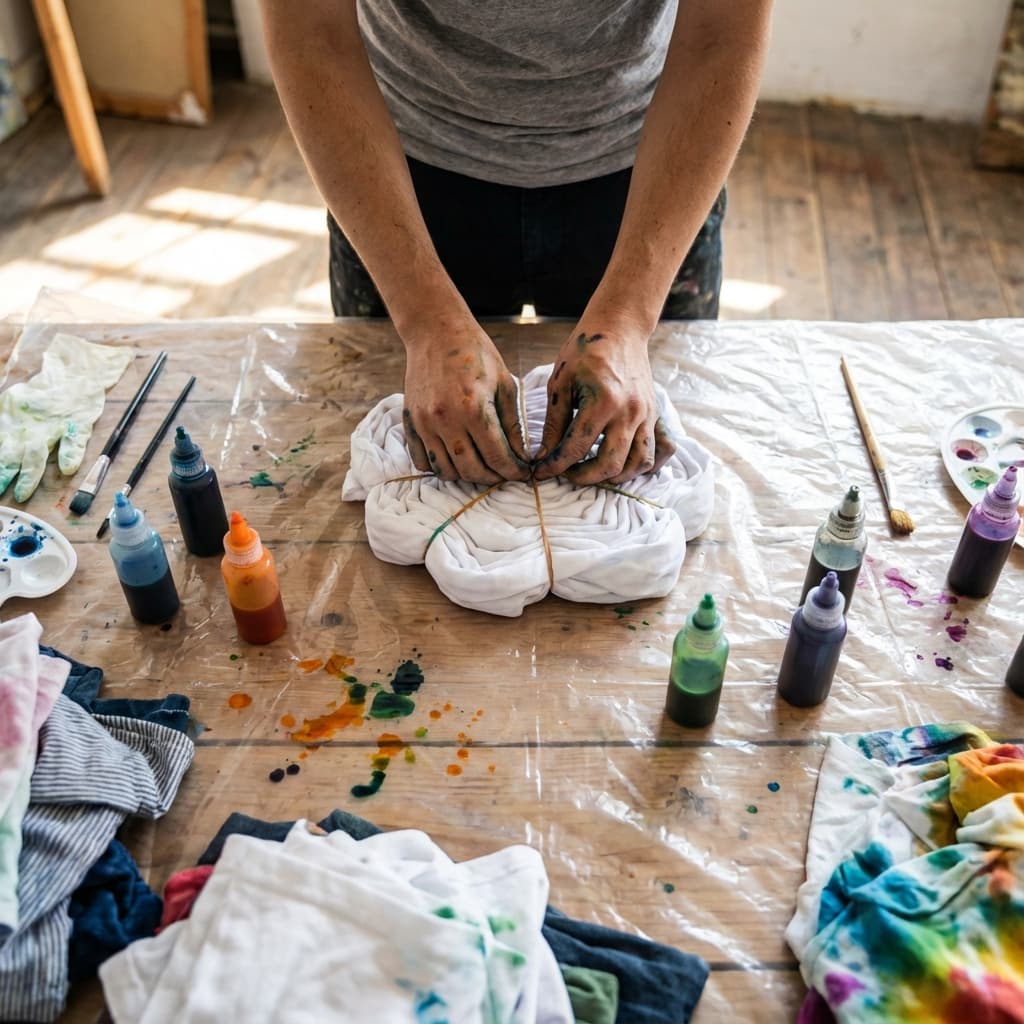
Both tie-dye and regular (solid) dyeing can transform a fabric, but they serve very different aesthetic purposes. We break down the differences in process, outcome, and application to help you decide on your next project.
Regular (Solid) Dyeing
The Goal: Uniformity. The aim is to achieve a single, solid color that looks the same across the entire garment.
The Process: The fabric is submerged freely in the dye bath, often with agitation to ensure the dye penetrates every fiber evenly. This is the standard for refreshing faded clothes or changing the base color of a garment.
Best For: Formal wear, uniforms, basic wardrobe staples, and covering stains.
Tie-Dye
The Goal: Pattern and contrast. The aim is to create designs by preventing dye from reaching certain parts of the fabric.
The Process: Sections of the fabric are folded, twisted, pleated, or crumpled and then bound with string or rubber bands. These binds acts as "resists." When dye is applied, it cannot penetrate the tight binds, leaving the original fabric color in those patterns.
Best For: Casual wear, artistic statements, summer clothing, and unique, one-of-a-kind fashion pieces.
Combining Both
Did you know you can combine them? A popular trend ("overdyeing") involves taking a patterned or tie-dyed garment and dyeing it a solid color. This creates a subtle, tonal effect where the original pattern shows through as a texture rather than a high-contrast print.
Have questions about this topic?
Our team is happy to help you with any dyeing or fabric care queries.
Contact Us